Plain-language specs
Torque, rpm, bore and offset are explained in the same note so fewer decisions are hidden in catalog shorthand.
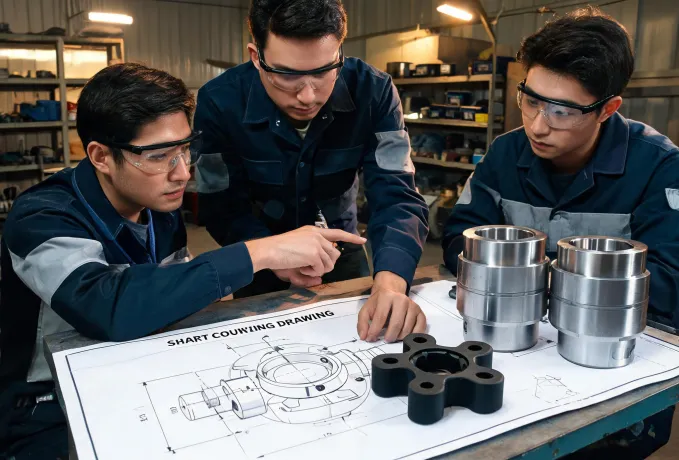
Lovejoy Coupling is built for the moment when a plant engineer, distributor or OEM buyer has partial information and a machine that cannot wait. Our role is to make coupling selection easier to explain: what the shaft sees, what the elastomer sees, and what the maintenance team needs to keep on the shelf.
The company began serving customers who often knew the Lovejoy-style coupling family they wanted but not the exact bore, spider material or service-factor margin. That small uncertainty created delays, wrong orders and repeated failures. We turned the process into a guided conversation: identify the driven equipment, confirm shaft sizes, read the environment, then choose the coupling type that matches the trade-off.
That philosophy still shapes the site. A maintenance planner should be able to describe a pump, conveyor, mixer or blower without decoding an engineering manual. An OEM designer should be able to send torque and rpm data without losing the practical concerns of assembly access and replacement stock. Our friendly advisor persona does not mean casual engineering; it means the engineering is written in a way a purchasing team can follow.
"A good coupling recommendation should explain why it fits the machine, not only which SKU fits the cart."
Torque, rpm, bore and offset are explained in the same note so fewer decisions are hidden in catalog shorthand.
Emergency spares are handled differently from new OEM programs because the pressure on the buyer is different.
Material and family recommendations can be saved with maintenance records for the next shutdown.
We publish selector notes, spider material explanations and alignment reminders because many coupling problems begin outside the coupling. Training a buyer to measure a keyway, photograph a failed element or read a motor plate can prevent the next rushed replacement. Our community work focuses on distributors, plant maintenance teams and early-career OEM engineers who need reliable rules of thumb before they need advanced simulation.
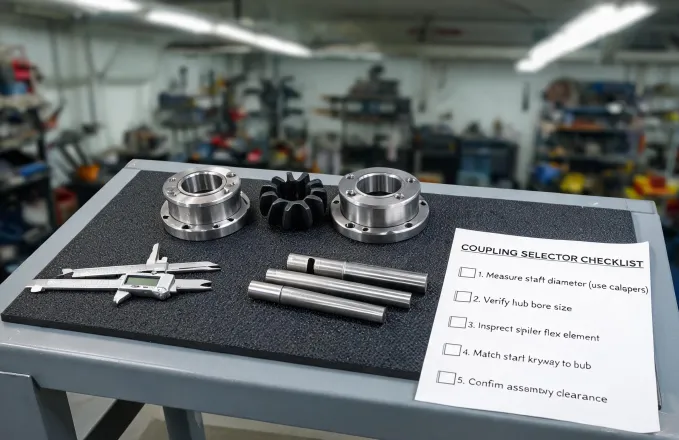
Send a machine note or a failed part photo. We will answer with a family, material and measurement checklist.