01Define the driven machine
Pumps, fans, conveyors, mixers and test stands create different torque patterns. Start with machine type, motor kW or hp, rpm and expected starts per hour. If the duty is reversing, pulsing or shock-loaded, write that down before looking at bore sizes.
02Measure the shafts
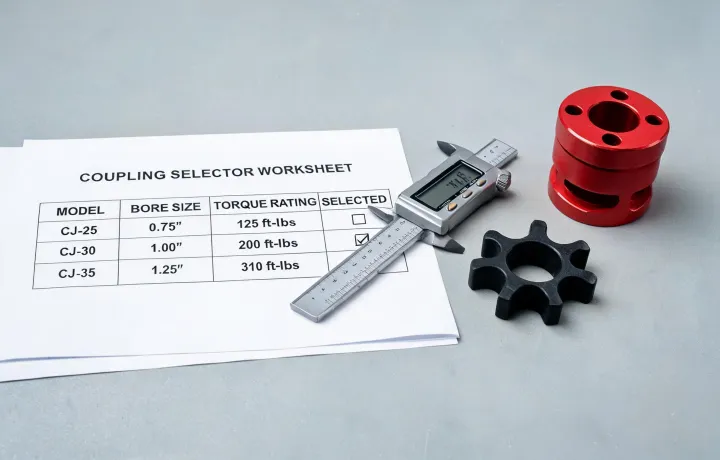
Record bore diameters, keyway dimensions, distance between shaft ends and available guard space. A coupling that is correct for torque can still fail the job if the hub length or keyway does not match the machine.
03Choose the behavior
Jaw couplings offer simple elastomer replacement, curved jaw couplings can improve speed and smoothness, disc couplings add stiffness and gear couplings suit heavier torque when lubrication and maintenance access are acceptable.
04Check the environment
Temperature, washdown chemicals, dust, oil and corrosion change spider material, guard requirements and inspection intervals. The right elastomer is often the difference between a routine spare and a repeated shutdown.